Philippine Green Coffee

The origin
the world forgot.

Rare, heritage Philippine green coffee — kept alive by the farmers who never stopped believing in what they grew. Sourced direct. Ready for the roasters willing to look beyond the familiar.

Batangas · Bukidnon · Benguet · Basilan · Sagada · Mt. Apo · Cordillera · Davao · Kalinga · Atok · Lipa · Bukidnon · Cavite · Cotabato · Sultan Kudarat

One country.
Four species.
A century forgotten.

The Philippines is one of the few places on earth where all four commercial coffee species grow — Arabica in the highland mists of Luzon and Mindanao, Robusta across the lowlands, Excelsa in Cavite and Palawan, and Liberica in the historic farms of Batangas.

For centuries, Philippine coffee fed international markets. It was shipped from the port of Batangas to Europe and celebrated across the continent. The country was one of the world's great coffee exporters — until the catastrophic blight of 1889 tore through its plantations, devastated an entire industry, and redirected the world's attention elsewhere.

The farmers kept going anyway.

Binhi — meaning "seed" in Filipino — exists to give these coffees the stage they never lost the right to. Not as curiosities. As extraordinary coffees from a country that never stopped growing them.

Map of Philippine coffee growing regions

Coffee growing regions

The coffees that
refused to disappear.

Three coffees. Three origins. Three communities the world overlooked — and couldn't outlast. The story earns the flavour. The flavour earns the story.

Arabica · Catimor · Natural Process

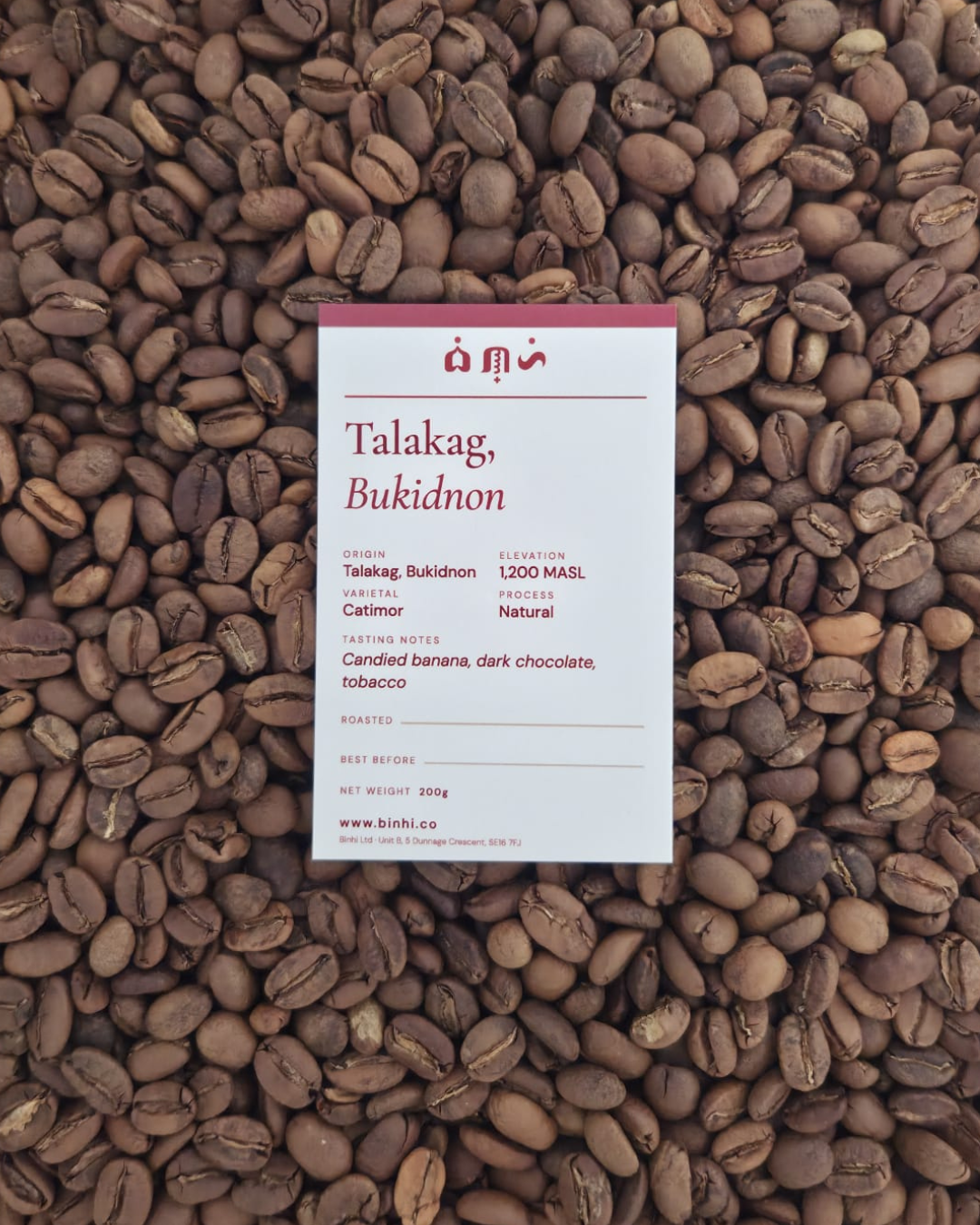
Bukidnon
Arabica

Bukidnon Province · Mindanao · 1,200m

In the volcanic highlands of Bukidnon Province, a single farmer tends his trees the way his community always has. Not as a method. As a way of life that has been handed down, refined, and quietly perfected over generations.

Bukidnon Province is known as the Food Basket of Mindanao — fertile, volcanic, relentless. At 1,200 metres, the highland conditions are uncompromising: cool nights, steady rainfall, and a growing season that refuses to be rushed. The coffee cherry ripens slowly here. Everything it becomes, it earns.

This Catimor is naturally processed — whole cherries laid out on raised beds and dried slowly in the sun, the fruit intact around the bean for weeks. Every sugar, every fruit note, pressed deep into the seed over time. The result is bold, full-bodied, and unambiguously itself.

Coffees like this don't announce themselves. They have no marketing budget, no international profile, no legacy of recognition. What they have is the land, the farmer, and decades of quiet dedication. That is everything. Nothing has been added. Nothing taken away.

Arabica · Typica Bourbon · Washed
Slow Food Ark of Taste

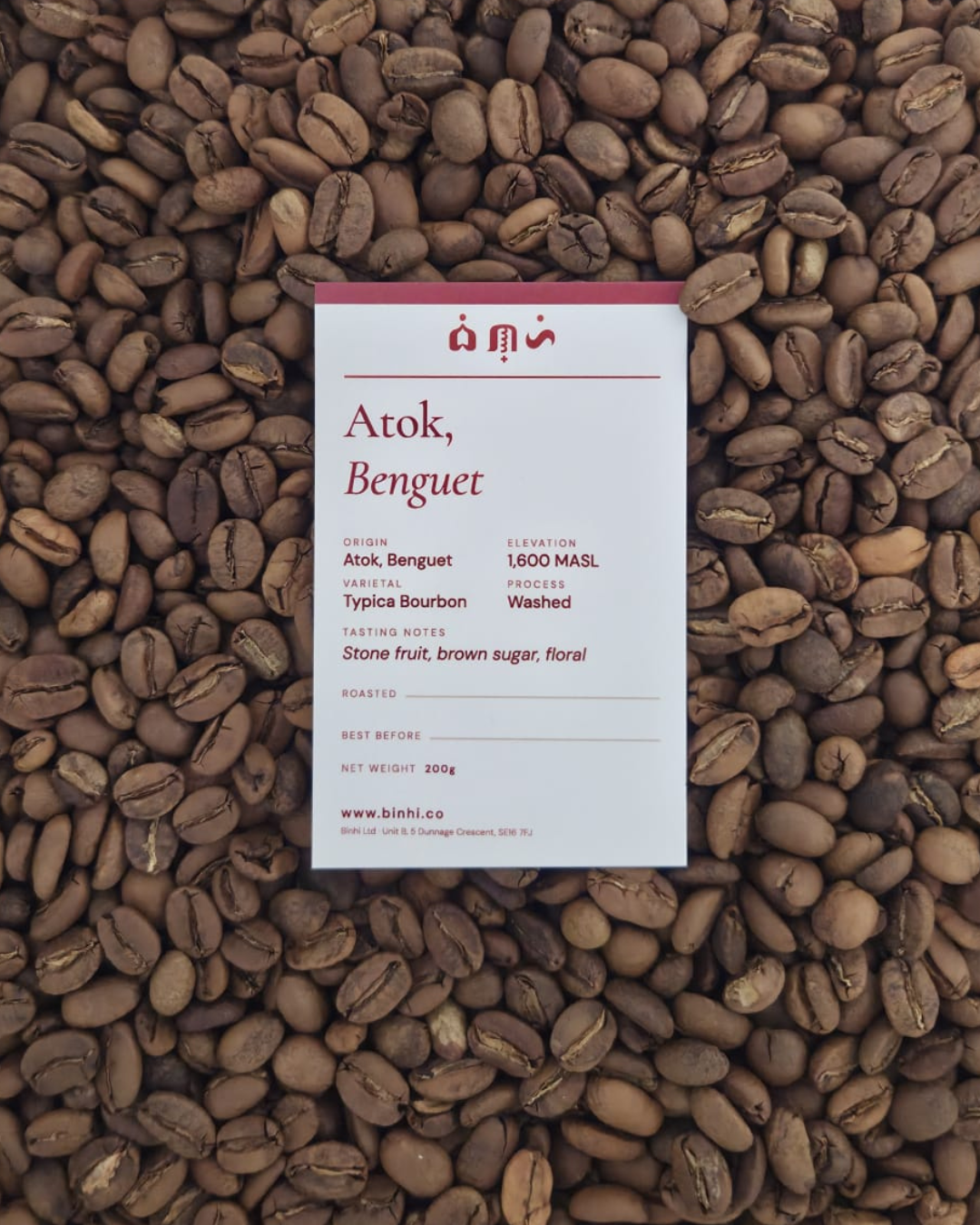
Benguet
Arabica

Atok, Benguet Province · Cordillera Administrative Region · 1,400–1,700m

The Cordillera mountains of northern Luzon are not easy terrain. The clouds sit low, the temperature rarely climbs, and the farming communities of Atok, Benguet have worked these terraced slopes for generations — growing coffee in conditions most farmers would walk away from.

At 1,400 to 1,700 metres, Benguet Province sits among the highest cultivated lands in the Philippines. The heritage Typica Bourbon variety grown here endures near-permanent mist, cold nights, and a growing season that refuses to be hurried. The altitude shapes every characteristic of the bean: the brightness, the acidity, the clarity. None of it happens fast. All of it is deliberate.

The Slow Food Foundation has placed Benguet Arabica on their Ark of Taste — not as a memorial, but as a warning. Without deliberate effort to source it and build a market around it, this variety may not survive another generation. These farming communities need markets, not charity.

What the communities of Atok produce — washed, dried, and carried down from these extreme altitudes — is luminous in the cup: bright, floral, layered with a sweetness that is entirely the product of where and how it was grown. When you choose this coffee, you are making an argument for its survival.

Liberica · Kapeng Barako
Slow Food Ark of Taste

Lipa
Liberica

Lipa, Batangas Province · Southern Luzon · 300–400m

Before the catastrophic blight of 1889, Kapeng Barako — Philippine Liberica — was one of the most celebrated coffees in the world. It still deserves to be. Liberica is one of the rarest coffee species on earth, accounting for less than 2% of global production. It grows not in cool highland mist but in hot, humid lowlands — resilient where Arabica is fragile, thriving where other species fail.

Shipped from the port of Batangas to Europe and beyond, it defined Philippine coffee culture for centuries. Lipa was its heartland. The farms of Batangas supplied a continent — celebrated internationally with the kind of recognition that the great origins command today. Then the blight came. It nearly ended all of it.

What saved Kapeng Barako were the farming families of Batangas who refused to walk away. While the global coffee trade moved on to other origins, the farmers of Lipa carried their Barako forward through generations of hardship. They didn't need the world to remember. They kept growing anyway.

The Slow Food Foundation has placed Kapeng Barako on their Ark of Taste — a register of foods that survive only because of the people who refuse to let them disappear. Our Liberica comes from those farms in Lipa, grown at 300 to 400 metres in the historic heartland of Barako country.

What we offer your roastery.

I

Rarity

Philippine coffee is one of the most genuinely rare origins in the global coffee trade. These varieties aren't obscure because they lack quality — they're obscure because the world stopped looking. That makes them something almost impossible to find: a real story, and a real flavour, that most roasters have never offered.

II

Quality

Rarity only matters if the cup justifies it. Every coffee Binhi sources is chosen because of what it delivers in the roaster's hands — distinct, traceable, and grown in conditions that produce genuine character. These are not curiosities. They are coffees worth roasting.

III

Story

Every coffee has a provenance. Most of the time it goes untold. Binhi exists because these particular stories — the farming communities, the varieties, the near-disappearances — are too significant to leave behind the supply chain. The origin is the product. We just make sure it travels with the bean.

IV

Traceability

We work directly with farming communities. That means fewer intermediaries, more transparency, and a supply chain short enough that we can account for every step of it. The farmer who grew it. The region it came from. The process it went through. All of it documented, all of it verifiable.

Be first to offer
Philippine coffee.

We're in early release with a small number of roasters. Three origins, three communities, one country the market overlooked. Request a sample and decide for yourself. Looking for something beyond our current range? We're always building new relationships with farms across the Philippines — tell us what you're after.

Request a Sample Pack

We supply green (unroasted) coffee beans. Minimum order quantities apply.